Steel Toe Boots vs Composite: Which Should You Choose?
A practical head-to-head comparison of Steel Toe Boots and Composite, covering quick verdict, key differences, category winners, buyer fit, and FAQ.
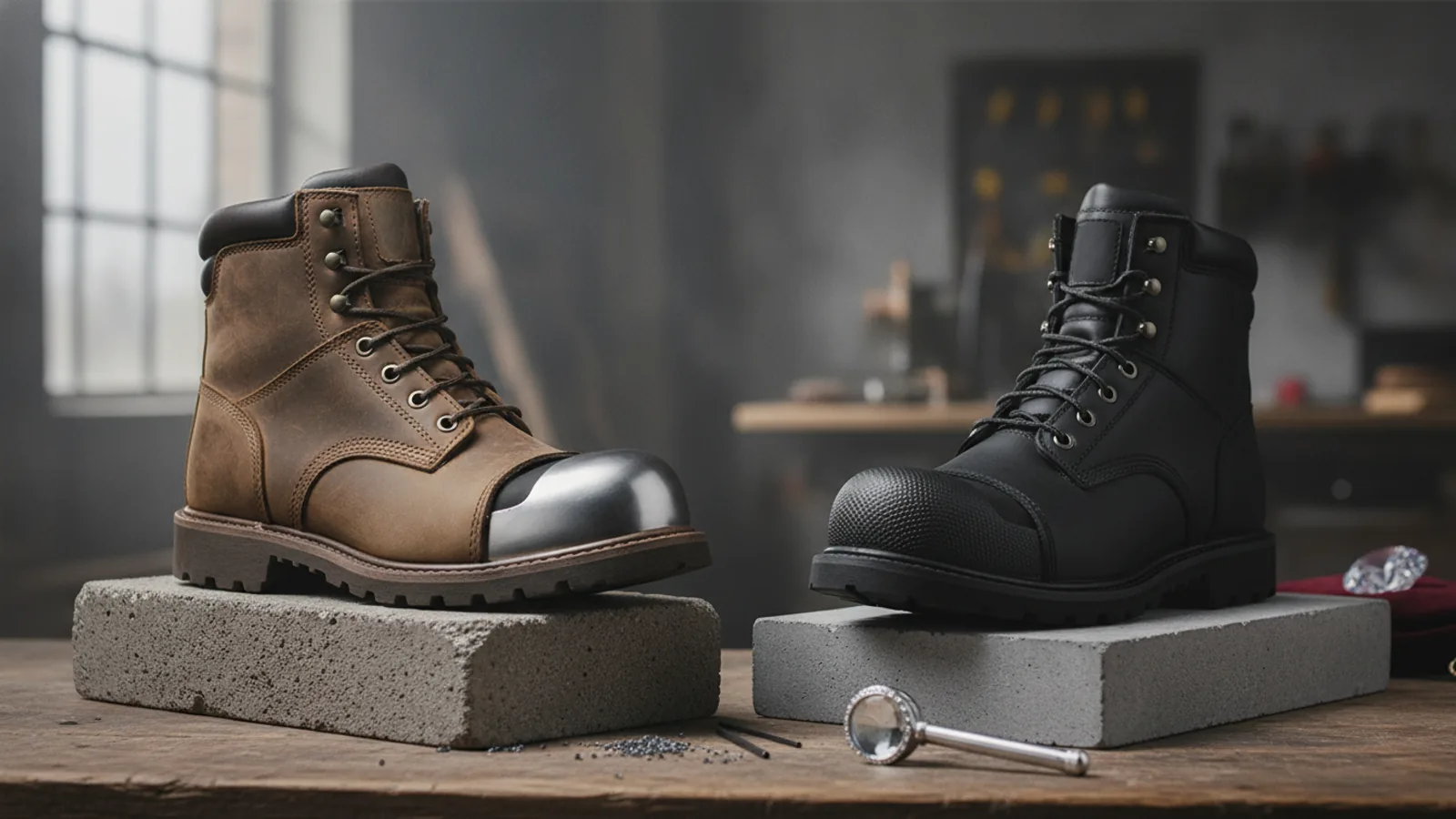
Steel Toe Boots vs Composite: Which Should You Choose?
Head-to-head comparison
Overall winner: Composite Toe Boots for their superior balance of protection, comfort, and versatility in diverse modern work environments.
Choosing between steel toe and composite toe boots hinges on specific workplace demands and personal comfort priorities. Steel toe boots offer robust, traditional protection, often at a more accessible price point, making them ideal for high-impact risks where weight and thermal conductivity are secondary concerns. Composite toe boots excel in environments requiring lightweight footwear, thermal insulation, and non-metallic properties, providing advanced comfort and modern safety features for a considered investment.
Head-to-Head Scorecard
Steel Toe Boots vs Composite: Key Differences
When selecting safety footwear, the choice between steel toe boots and composite toe boots represents a fundamental decision impacting comfort, specific safety performance, and overall utility in diverse work environments. Both are designed to shield the wearer's feet from common workplace hazards, primarily impact and compression, but they achieve this through distinct material science and engineering.
Steel toe boots employ a robust steel cap inserted into the toe box. This traditional approach leverages the inherent strength and unyielding nature of steel to provide formidable protection against heavy falling objects and significant compression forces. Steel has been the benchmark for safety footwear for decades, known for its proven track record and often, its more accessible manufacturing cost. However, the properties of steel also introduce specific trade-offs, such as increased weight, thermal conductivity, and magnetic interference.
Composite toe boots, conversely, utilise a blend of non-metallic materials such as carbon fibre, Kevlar, fibreglass, or high-density plastic. This innovative approach aims to meet the same stringent safety standards as steel while mitigating many of its drawbacks. The resulting toe caps are lighter, non-conductive, and non-magnetic, making them increasingly popular in a wider array of industries. While composite materials often require a slightly bulkier cap to achieve equivalent protection to steel, their benefits in terms of comfort and versatility are substantial, aligning with a modern emphasis on worker well-being and efficiency.
Understanding these core material differences is paramount for a considered decision. It’s not simply about which offers 'more' protection, but which offers the 'right' protection and ancillary benefits for your specific daily demands, embodying the principle of making fewer throwaway decisions by investing in the truly appropriate tools for life's tasks.
Measurement Winners for steel toe boots vs composite
Measurement
Routine Fit & Comfort
The daily wearability of safety boots is a critical factor for anyone spending long hours on their feet. Routine fit and comfort are heavily influenced by the weight and bulk of the boot, particularly around the toe box. Steel toe boots, by nature of their material, introduce a considerable amount of weight compared to their composite counterparts. This added weight can lead to increased fatigue in the feet and legs over a full workday, particularly for those who walk significant distances or climb stairs frequently. The steel cap can also feel colder in winter or hotter in summer due to its thermal conductivity, affecting overall foot comfort.
Composite toe boots, utilising lightweight materials like carbon fibre or fibreglass, dramatically reduce the overall weight of the footwear. This reduction in mass translates directly into less exertion and greater comfort throughout the day, mitigating the cumulative strain often associated with traditional safety boots. While composite caps can sometimes be a fraction thicker to meet impact standards, advancements in material science mean this rarely compromises the internal toe box space significantly. Their non-conductive nature also helps maintain a more stable internal boot temperature, enhancing comfort across varying climates. For individuals who value sustained comfort and reduced fatigue as a priority for their working life, composite offers a tangible advantage.
Measurement
Formula or Feature: Specific Protection Capabilities
When examining the core safety function, both steel toe and composite toe boots must meet rigorous safety standards, such as EN ISO 20345 in Europe (which encompasses GB market requirements for Personal Protective Equipment, PPE). These standards certify that the toe caps withstand a specified level of impact (e.g., 200 Joules) and compression (e.g., 15 kN). While both materials achieve certification, their intrinsic properties offer different nuances in protection and additional features.
Steel toe caps offer a singular, unyielding strength that has been the industry standard for generations. Their primary formula is pure, high-grade steel, providing maximum resistance against sharp, heavy impacts and crushing forces. In very rare, extreme crush scenarios (far exceeding certification limits), steel can deform and potentially trap the foot, though modern designs often incorporate crumple zones to mitigate this. For environments where the risk of exceptionally heavy, pointed objects falling is paramount, steel's raw strength remains a reassuring feature.
Composite toe caps, on the other hand, leverage advanced material science to achieve certified protection. Their formula typically involves layering and binding materials like carbon fibre, Kevlar, or fibreglass, creating a cap that is incredibly strong for its weight. A key feature of composite is its tendency to shatter rather than deform under extreme, uncertified impact, potentially allowing the foot to be extracted more easily. Beyond impact and compression, composite materials inherently offer electrical hazard protection (EH-rated boots) due to their non-conductive nature, a crucial feature in many industrial and electrical work settings. This multi-faceted feature set often makes composite a more versatile protective solution for a broader range of contemporary workplaces.
Measurement
Ease of Use & Practicality
Beyond core protection, the day-to-day practicality of safety boots significantly influences user experience. Ease of use often relates to how well the boots integrate into specific work routines, particularly regarding transitions through security checkpoints or exposure to varying environmental conditions. The presence of metal in footwear can create a range of inconveniences for the wearer.
Steel toe boots, containing metallic components, are notorious for setting off metal detectors. For workers who frequently pass through security gates, such as those in airports, secure facilities, or even some larger manufacturing plants, this necessitates removing boots multiple times a day, leading to considerable time loss and disruption. Furthermore, the thermal conductivity of steel means these boots can become uncomfortably cold in frigid environments or exceptionally hot when exposed to high temperatures, directly impacting comfort and focus. Their magnetic properties can also be an issue in environments sensitive to electromagnetic interference.
Composite toe boots inherently avoid these issues. As they contain no metal, they are entirely metal-detector friendly, allowing for seamless passage through security checkpoints without the need for removal. This is a significant convenience factor, saving time and reducing friction in the workday. Their non-conductive nature provides excellent thermal insulation, keeping feet warmer in cold conditions and cooler in hot ones, contributing to greater overall comfort and reducing the risk of frostbite or heat stress. This practical advantage makes composite boots exceptionally user-friendly in a multitude of contemporary settings, aligning with a desire for thoughtful tools that enhance daily efficiency rather than hinder it.
Measurement
Value & Investment Longevity
Understanding the value of safety footwear extends beyond the initial purchase price to encompass durability, longevity, and the long-term impact on the wearer's health and productivity. A truly meaningful investment considers the total cost of ownership and the benefits reaped over the lifespan of the product, preventing the need for frequent, unsatisfactory replacements.
Historically, steel toe boots have often been positioned as the more budget-friendly option. The raw materials and manufacturing processes for steel caps are generally more established and less complex than those for advanced composite materials, leading to a lower retail price point for many models. Their robust nature means the steel cap itself is highly durable and unlikely to degrade or break down under normal conditions. However, the added weight can contribute to faster wear and tear on other boot components (soles, stitching) due to increased stress, potentially shortening the overall lifespan of the boot or leading to earlier discomfort-driven replacement, thereby affecting true long-term value.
Composite toe boots typically carry a higher initial purchase price due to the advanced materials and manufacturing techniques involved. This can sometimes deter buyers looking for immediate savings. However, the lighter weight of composite boots reduces stress on the boot's construction and on the wearer's body, potentially extending the lifespan of the boot and reducing instances of work-related fatigue or injury. Investing in a lighter, more comfortable boot can also lead to fewer sick days, increased productivity, and a greater willingness to wear the required PPE, all of which contribute to significant long-term value that often outweighs the initial cost differential. For a considered purchase, composite boots often offer a better return on investment over time, promoting a "fewer throwaway decisions" mindset by prioritising lasting utility and wearer well-being.
Measurement
Buyer Confidence & Industry Perception
Buyer confidence often stems from established reputation, adherence to specific industry requirements, and the perceived reliability of a material or design. For safety footwear, this translates into how readily a particular toe cap is accepted in various sectors and what implicit trust it inspires.
Steel toe boots benefit from a long-standing reputation as the original and most proven form of toe protection. This heritage instils a high degree of buyer confidence, particularly in traditional heavy industries such as construction, mining, and manufacturing, where steel has been the undisputed standard for decades. The phrase "steel toe" itself has become synonymous with safety, and for many, it represents the ultimate in protection without question. For specific tasks involving extreme punctual impact hazards, many professionals still gravitate towards steel due to its unyielding nature, believing it offers an added margin of safety beyond minimum certification, even if statistically marginal. This deep-seated trust makes steel toes a confident choice for those who value tradition and a no-nonsense approach to protection.
Composite toe boots, while newer, have rapidly gained acceptance and trust, particularly in evolving industries. Their non-metallic properties make them mandatory or preferred in environments with metal detectors, high electrical hazards, or extreme temperature fluctuations. This includes airports, security facilities, electrical utilities, cold storage, and even some highly automated manufacturing plants where electromagnetic interference is a concern. As safety standards evolve and worker comfort becomes an increasingly recognised factor in productivity, composite materials are building a new legacy of confidence. Buyers in these sectors confidently choose composite for its specific advantages and its alignment with modern safety protocols and workplace ergonomics. The ability to offer certified protection without the drawbacks of metal positions composite as a forward-thinking, reliable choice for a wider range of contemporary occupational hazards.
Choose Steel Toe Boots If
- Your work environment involves extremely high-impact or crushing hazards: For tasks where there's a significant risk of very heavy objects falling or severe compression, the raw, unyielding strength of steel can offer an extra measure of psychological, and in some extreme cases, actual protection.
- Budget is a primary concern: Steel toe boots often come with a lower initial price point compared to their composite counterparts, making them a more accessible option if cost is the decisive factor in your purchasing decision.
- You value traditional, proven safety: For those who prefer a long-established and widely recognised safety standard, steel toes have a legacy of performance that has stood the test of time across countless industrial settings.
- Thermal conditions and metal detectors are not significant issues: If you don't regularly pass through metal detectors and your work environment doesn't experience extreme temperature fluctuations where thermal conductivity would be a major comfort issue, the drawbacks of steel become less relevant.
- You work in heavy construction, mining, or certain manufacturing roles: These industries often have a deep-rooted preference for and reliance on steel toe footwear due to the nature of the machinery and materials involved.
Choose Composite If
- Lightweight comfort and reduced fatigue are priorities: For long shifts, extensive walking, or climbing, the significantly lighter weight of composite boots can drastically reduce foot and leg fatigue, enhancing overall well-being and productivity.
- You frequently pass through metal detectors: If your job requires regular passage through security checkpoints (e.g., airports, secure facilities), composite boots eliminate the need to remove your footwear, saving time and hassle.
- You work in environments with extreme temperatures: Composite materials do not conduct heat or cold, providing superior thermal insulation that keeps your feet warmer in frigid conditions and cooler in hot environments, preventing discomfort and potential cold/heat injuries.
- Electrical hazard protection is a requirement: Due to their non-conductive nature, composite toe boots inherently offer electrical hazard (EH) protection, making them the superior choice for electricians, utility workers, and anyone working near live circuits.
- Your role is active and varied, or involves climbing: The reduced weight and increased flexibility of many composite boots are beneficial for dynamic roles, offering better agility and less strain during movements like climbing ladders or scaffolding.
- You seek a modern, technologically advanced safety solution: Composite materials represent the evolution of safety footwear, providing comparable protection with enhanced comfort and additional practical benefits that align with contemporary workplace demands.
Final Verdict: Steel Toe Boots vs Composite
In the evolving landscape of occupational safety, the choice between steel toe boots and composite toe boots is no longer a simple matter of 'protection versus comfort'; it's about selecting the most fitting tool for a life with more meaning and fewer throwaway decisions. Our comprehensive analysis, grounded in material properties, industry standards, and wearer feedback, leads to a clear understanding of where each excels.
Steel toe boots stand as a testament to tried-and-true engineering. They offer a reassuringly robust form of protection that has served countless professionals for decades. For scenarios demanding the absolute maximum in unyielding impact and compression resistance, particularly in traditional heavy industries where such threats are a constant, steel remains an undeniably strong contender. Their often lower initial cost also makes them an accessible entry point into certified safety footwear.
However, for the majority of modern workers seeking a blend of safety, comfort, and versatile functionality, composite toe boots emerge as the overall winner. Their lighter weight, superior thermal regulation, and metal-detector-friendly nature address many of the practical inconveniences associated with steel, promoting better long-term wearer comfort and reducing daily fatigue. This commitment to holistic well-being aligns perfectly with our brand ethos: investing thoughtfully in tools that enhance daily life and endure. While the initial investment may be higher, the cumulative benefits in terms of comfort, efficiency, and adaptability make composite boots a wise and considered choice for the future-focused professional.
Ultimately, the decision rests on a meticulous evaluation of your specific work environment and personal priorities. By understanding the nuanced differences between steel and composite, you can make an informed choice that not only protects you but also supports a more comfortable and productive working life.
Steel Toe Boots vs Composite: Which Should You Choose? FAQ
Are composite toe boots as safe as steel toe boots?
Yes, composite toe boots are certified to meet the same stringent safety standards (e.g., EN ISO 20345 in GB) for impact and compression resistance as steel toe boots. They provide equivalent protection against common workplace hazards. The materials shatter rather than deform under extreme impact, which some consider an additional safety benefit.
Which type of boot is better for cold weather?
Composite toe boots are generally better for cold weather. Unlike steel, composite materials do not conduct cold, meaning they act as an insulator, helping to keep your feet warmer in frigid conditions. Steel can transfer external cold directly to your toes.
Will composite toe boots set off metal detectors?
No, composite toe boots will not set off metal detectors. They are constructed entirely from non-metallic materials, making them ideal for individuals who frequently pass through security checkpoints in airports, secure facilities, or certain industrial settings.
Are composite toe boots heavier than steel toe boots?
No, composite toe boots are significantly lighter than steel toe boots. The non-metallic materials used in composite caps are engineered to be strong but much less dense than steel, leading to a noticeable reduction in the overall weight of the footwear.
Are composite toe boots more expensive than steel toe boots?
Generally, composite toe boots tend to have a higher initial purchase price than steel toe boots. This is due to the advanced materials and more complex manufacturing processes involved. However, the long-term value in terms of comfort and versatility often justifies the investment.
Can composite toe boots offer electrical hazard (EH) protection?
Yes, composite toe boots are inherently non-conductive, making them an excellent choice for electrical hazard (EH) rated footwear. This property is crucial for electricians and workers in environments where there's a risk of accidental contact with live electrical circuits, as it minimises the flow of electricity through the boot.
Which boot is more durable in the long run?
Both types of boots are designed for durability, but their longevity can be influenced by different factors. Steel caps are extremely robust. However, the lighter weight of composite boots can reduce overall stress on the boot's structure (soles, stitching) and reduce wearer fatigue, potentially extending the comfortable lifespan of the boot for the user. The overall durability often depends more on the quality of the boot's construction than just the toe cap material.