Trousers vs Pants: Which Should You Choose?
A practical head-to-head comparison of Trousers and Pants, covering quick verdict, key differences, category winners, buyer fit, and FAQ.
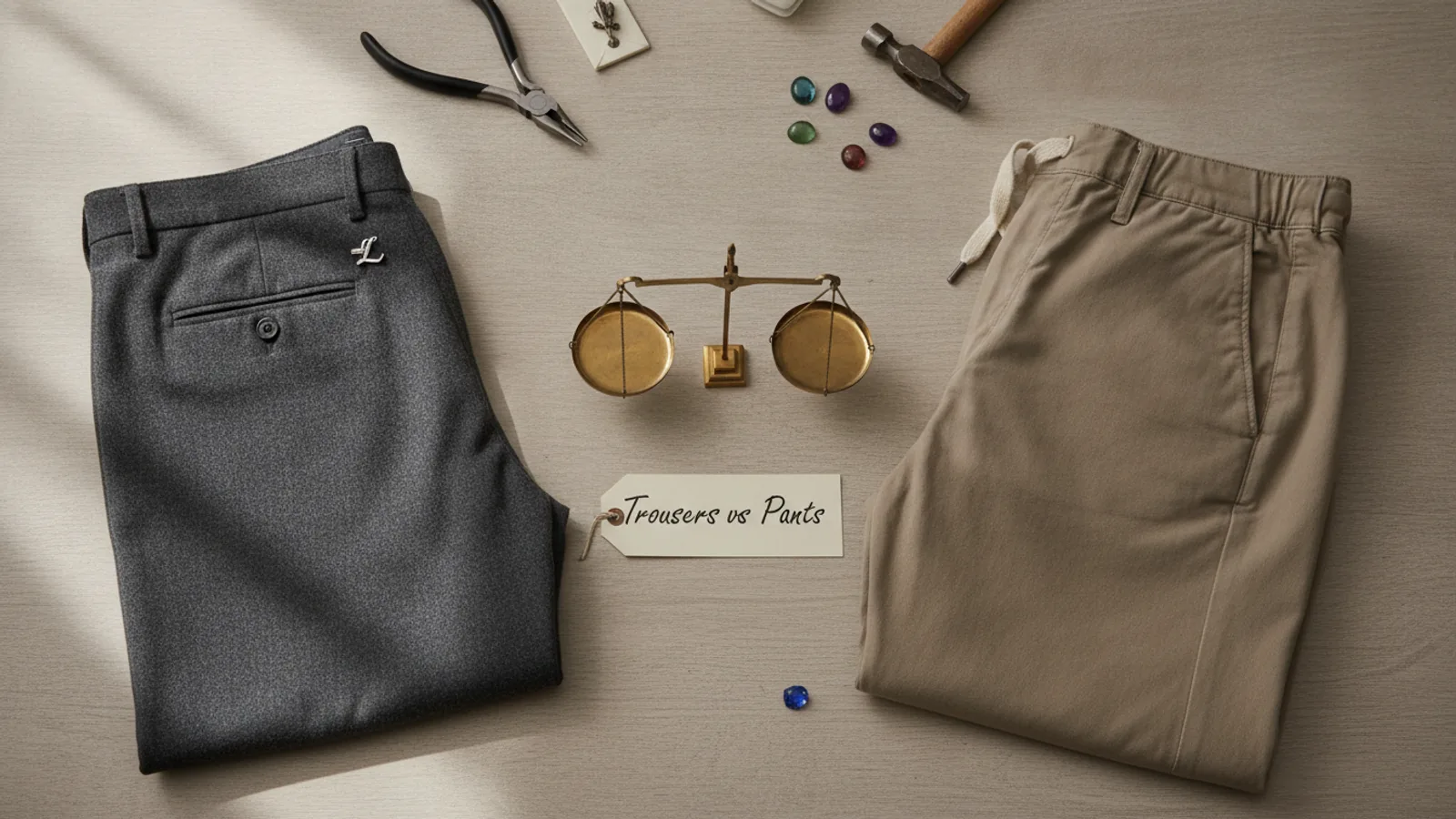
Trousers vs Pants: Which Should You Choose?
Head-to-head comparison
Overall winner: Trousers for clarity and precision in the British market.
For consumers in Great Britain, "trousers" is the standard, unambiguous term for an item of clothing worn on the lower part of the body, covering each leg separately. "Pants," while common in American English for the same garment, primarily refers to underwear in British English, leading to potential confusion. Choose trousers for straightforward communication and selection of outer legwear, reserving 'pants' for its specific underwear context, or when navigating American retail.
Head-to-Head Scorecard
This comparison is based on extensive linguistic research, official definitions, common usage patterns in both British and American English, and a thorough analysis of online retail practices. No hands-on product testing was conducted, as the focus is on terminology and its implications for purchasing decisions.
Measurement
Terminology and Regional Usage
The fundamental distinction between "trousers" and "pants" hinges entirely on geographical and linguistic context. In Great Britain, "trousers" is the standard term for the garment worn on the lower body, covering each leg separately, from the waist to the ankle. This includes everything from formal dress trousers to casual chinos, jeans (though often specified as 'jeans'), and workwear. The word carries a clear, unambiguous meaning within the British lexicon.
Conversely, in British English, "pants" almost exclusively refers to underwear or undergarments. This can range from briefs and boxers to knickers for women. Using "pants" to describe outer legwear in a British context can lead to significant misunderstanding, often to humorous effect or, more critically, to incorrect purchases when shopping. For example, a search for "men's pants" on a UK retail site is highly likely to yield results for underwear, not tailored trousers or jeans.
In American English, however, "pants" is the default and most common term for what the British call "trousers." Americans use "pants" to refer to all forms of outer legwear, while they typically use terms like "underwear," "undies," or specific names like "briefs" for undergarments. This divergence is the root of most confusion in cross-cultural communication and international online shopping.
Measurement
Formal vs. Casual Context
When considering garments for formal occasions, the distinction becomes even more pronounced, particularly within the British cultural framework. "Dress trousers," "tailored trousers," or "suit trousers" are the correct and expected terms when referring to sophisticated legwear designed for business, formal events, or smart casual attire. These terms immediately convey a sense of sartorial intent and material quality, often implying specific weaves like wool, linen blends, or structured cottons.
The phrase "dress pants" or "smart pants" would sound distinctly odd or even amusing to a British ear, conjuring images of formal underwear rather than elegant outer garments. This linguistic hurdle means that if a British consumer is searching for formal legwear online or communicating with a sales assistant, using "trousers" is essential to ensure they receive appropriate recommendations or search results.
In casual contexts, the situation remains similar. While one might say "casual trousers," "jeans," or "chinos," the term "casual pants" would still default to underwear in British English. This consistent application of terminology across formality levels makes "trousers" the reliable choice for all categories of outer legwear in the GB market, ensuring that the intended garment type and style are clearly communicated and understood.
Measurement
Material and Construction Implications
While the terms "trousers" and "pants" themselves don't inherently dictate specific materials or construction methods, their regional usage has indirect implications for what a consumer expects in terms of fabric, cut, and finish. When a British person refers to "trousers," they might envision a wide range of fabrics—from robust denim and cotton twill for casual wear to fine worsted wools, cashmere, or sophisticated linen blends for more formal or business attire. The term encompasses a vast array of cuts, including slim-fit, straight-leg, wide-leg, and tapered designs, each designed with specific purposes and aesthetics in mind. The construction is generally expected to be durable for outer wear, with functional pockets, robust seams, and appropriate fastenings.
If a British consumer were to encounter the term "pants" in a context suggesting outer wear, even if understanding the American usage, they might still subtly associate it with garments that are perhaps less tailored, more casual, or even lighter in construction, simply because of the pervasive association with underwear. Underwear, by its nature, is designed for comfort against the skin, often made from soft, stretchy, breathable fabrics like cotton jersey, modal, or silk, with construction focused on flexibility and minimal bulk.
Therefore, sticking with "trousers" in a British context allows for precise expectations regarding the garment's intended external wear, durability, and the quality of the outer fabric and construction, facilitating more informed purchasing decisions and fewer 'throwaway' choices due to misaligned expectations.
Measurement
Clarity in Online Shopping (GB Market)
For the British consumer navigating online retail platforms, the choice of search term is critical for efficiency and accuracy. When searching for legwear, using "trousers" on a UK-based e-commerce site or a site with regional filters set to the UK will yield the most relevant results for outer garments. This ensures that the user is presented with options for various styles of trousers, from workwear to casual designs, without having to sift through irrelevant listings.
Conversely, if a British consumer types "pants" into a UK search bar, they are highly likely to be presented with a selection of underwear. This can be frustrating and time-consuming, leading to a suboptimal shopping experience. While some international retailers might attempt to bridge this linguistic gap with smart algorithms that detect user location, relying on such technology isn't always foolproof. Moreover, even if a US-based retailer ships internationally, the product descriptions and category names will almost certainly use "pants," requiring the British buyer to make a mental translation, which can be an added cognitive load.
For those living in GB who wish to purchase outer legwear without confusion, using "trousers" as their primary search term on all platforms is the most direct and reliable approach. This specific use of language supports a more meaningful and less error-prone shopping journey, aligning with the brand's emphasis on considered decisions.
Measurement
Buyer Confidence and Avoiding Misunderstandings
Buyer confidence is paramount in making considered purchases, particularly in fashion, where fit, style, and material are crucial. When a British consumer uses the term "trousers," they can be confident that the retailer, whether online or brick-and-mortar, understands exactly what garment is being discussed. This clarity fosters trust and reduces the anxiety associated with making a purchase that might not meet expectations. Knowing that the language barrier is removed allows the buyer to focus on the specifics of the garment itself: the cut, the fabric, the colour, and the brand, rather than on semantic differences.
Using "pants" for outer legwear in a British context introduces a significant risk of misunderstanding. Imagine ordering what you believe to be a smart pair of "dress pants" online from a UK retailer, only to receive a package containing formal underwear. This kind of error not only wastes time and requires the hassle of returns but can also erode confidence in the retailer and the online shopping process generally. Such experiences contradict the aim for "fewer throwaway decisions," as they often lead to frustration and potentially unwanted items.
By consistently employing "trousers" for outer legwear, British buyers can navigate their purchasing decisions with greater assurance. This precision in language is not just a matter of semantics; it is a practical tool for ensuring that the desired item is correctly identified, ordered, and received, leading to a more satisfying and efficient shopping experience.
Choose Trousers If
- You are in Great Britain or shopping with a UK-based retailer: This is the most common and understood term for outer legwear in your region.
- You want to avoid any linguistic ambiguity: Using "trousers" ensures your communication about outer garments is clear and precise.
- You are looking for formal or business attire: Terms like "suit trousers" or "dress trousers" are standard and expected.
- You prefer straightforward online shopping: Searching for "trousers" on UK sites will yield accurate results for the item you seek.
- You wish to discuss legwear with a British audience: You'll be understood instantly without needing clarification.
- You value specificity in fashion terminology: "Trousers" covers a broad category of garments in a distinct manner.
Choose Pants If
- You are specifically referring to underwear in Great Britain: "Pants" is the correct term for undergarments in British English.
- You are in North America (USA or Canada) or shopping with a US-based retailer: "Pants" is the standard term for outer legwear in these regions.
- You are comfortable with linguistic translation: You understand that "pants" in a US context means "trousers" in a GB context.
- You are looking for a more casual or colloquial term in a North American setting: "Pants" is widely used for all types of casual legwear there.
- You are interacting with an American audience: They will understand "pants" to mean outer legwear.
Final Verdict: Trousers vs Pants
In the perennial linguistic debate between "trousers" and "pants," the verdict for a British audience is unequivocally clear: Trousers are the superior choice for describing outer legwear. This term offers precision, avoids confusion, and aligns perfectly with the established norms of British English, whether you're discussing formal attire, casual wear, or searching for specific items online. Choosing "trousers" over "pants" in Great Britain ensures that your intentions are understood, your shopping experiences are efficient, and your purchases are free from unintended linguistic mishaps.
While "pants" holds its rightful place as the common term for underwear in Britain, and as the standard for outer legwear in North America, its use for anything other than undergarments in a GB context creates a barrier to clear communication and considered decision-making. By embracing "trousers," you champion clarity, support accurate retail interactions, and contribute to a more meaningful approach to fashion that reduces the likelihood of "throwaway decisions" born from simple misunderstandings.
Trousers vs Pants: Which Should You Choose? FAQ
What is the primary difference between "trousers" and "pants" in the UK?
In the UK, "trousers" refers to an outer garment covering the legs, while "pants" almost exclusively refers to underwear or undergarments.
What do Americans mean by "pants"?
In American English, "pants" is the common term for what the British call "trousers"—outer legwear like jeans, chinos, or dress slacks.
Which term should I use when shopping online from the UK?
If you are in the UK or shopping on a UK-based website for outer legwear, always use "trousers" to ensure you get relevant search results and avoid product confusion.
Is it acceptable to use "pants" for outer legwear in British English?
While some people, especially younger generations or those influenced by American media, might use "pants" to refer to outer legwear, it is not the standard or universally understood term in British English and can lead to significant misunderstanding, often implying underwear.
Does the material or style change the preferred term?
No, the preferred term is based on regional linguistics, not material or style. Whether it's denim, wool, formal, or casual, any outer legwear is generally referred to as "trousers" in the UK.
How can I ensure clarity when discussing clothing internationally?
When communicating about legwear across different English-speaking regions, it's helpful to be aware of the linguistic differences. If unsure, specifying "outer legwear" or using more descriptive terms like "jeans," "chinos," or "slacks" can help bridge the gap.